Explore Sun
  • Home (current)
  • About
  • Gallery One
  • Gallery Two
  • Information
  • NASA Parker Solar Probe: First Encounter With The SUN

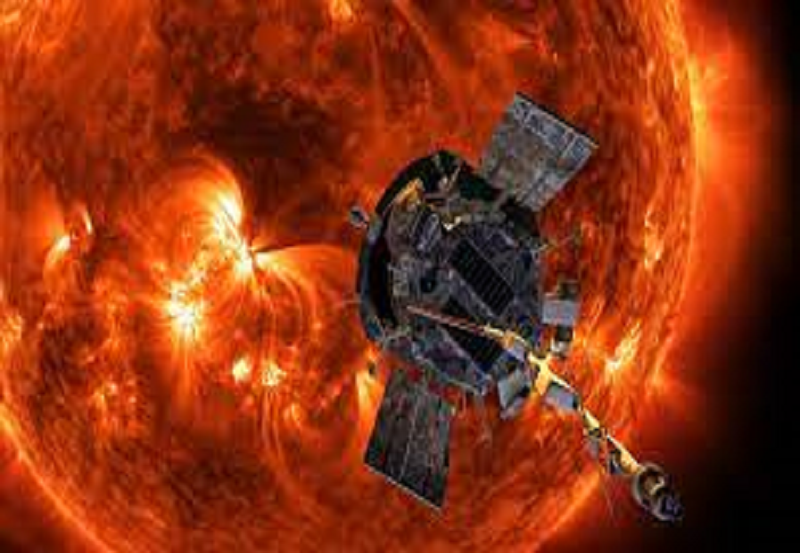
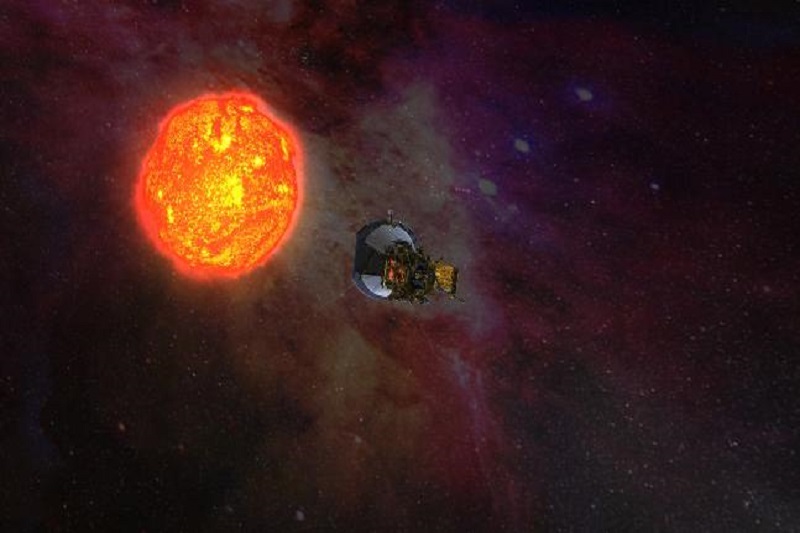
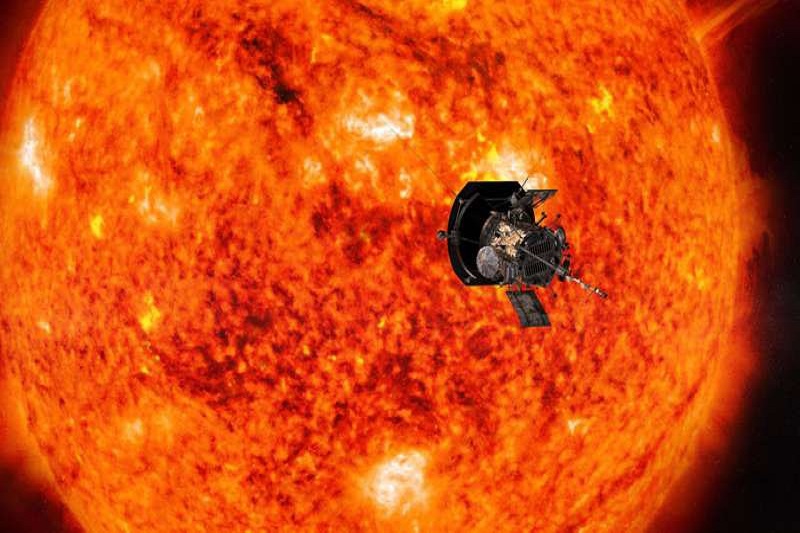
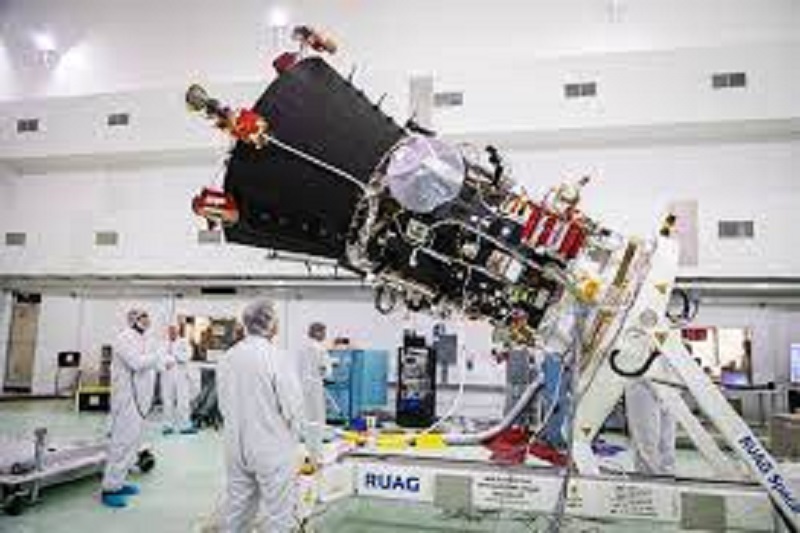
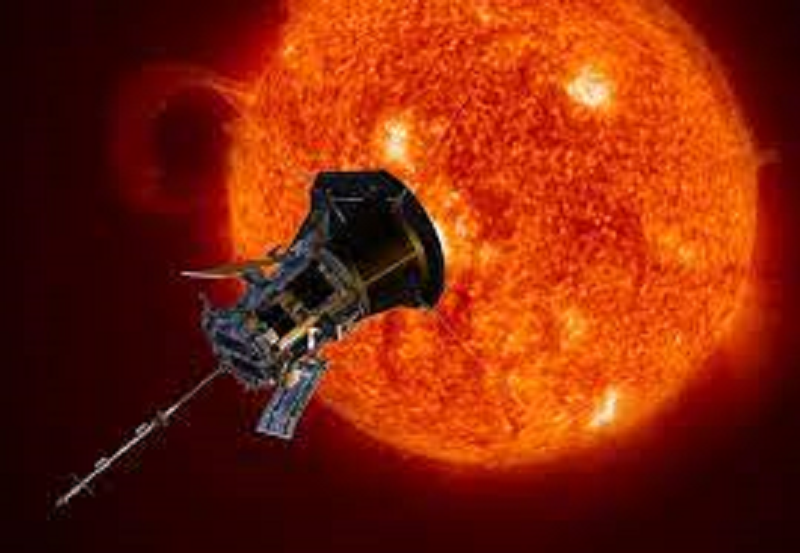
    At around 3:28am in the morning of 6 november 2018 NASA's PARKER SOLAR PROBE hurtled past the Sun at a speed of 343,000 kilometers per hour, simultaneously breaking the record for the closest human-made object to the Sun and the fastest human-made objectin history.

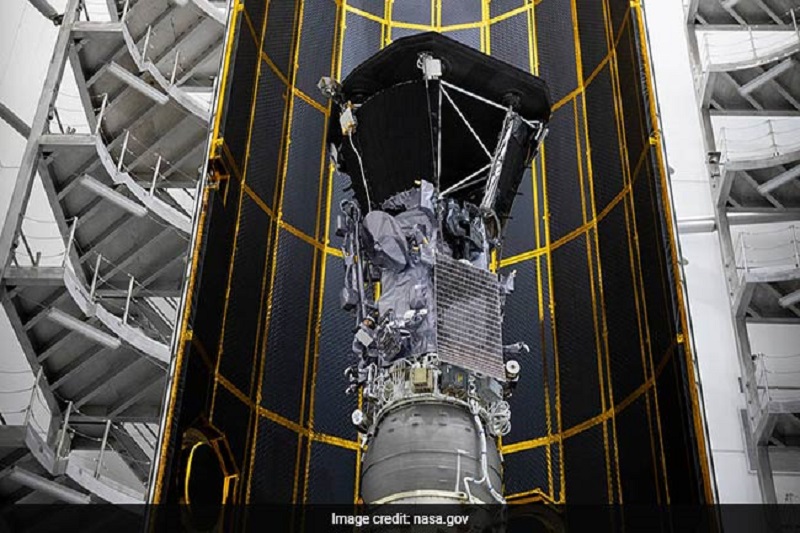
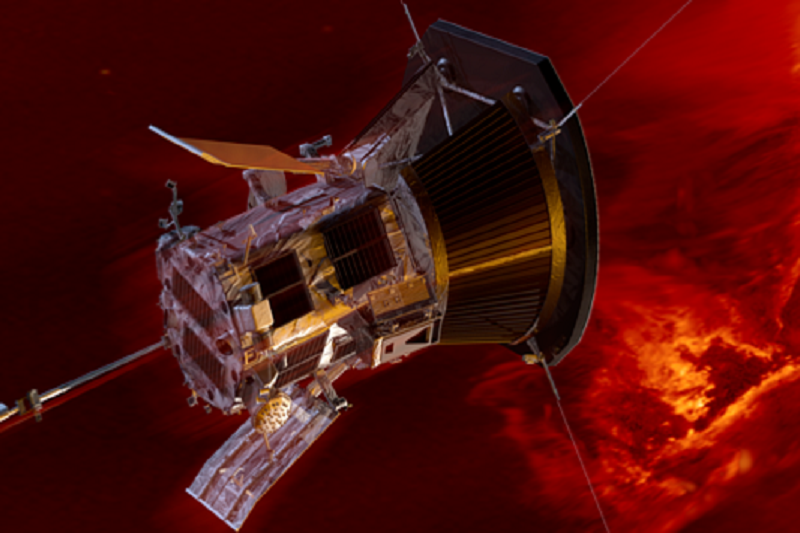
    This is the first of 24 flybys that Parker will make during its seven-year mission to unlock the secrets of our closest star. At these close quarters intense solar radiation will heat the Sun-facing side of the spacecraft to a blistering 440 degrees Celsius, with Parker’s delicate instruments protected by an 11-centimetre-thick carbon composite heat shield.

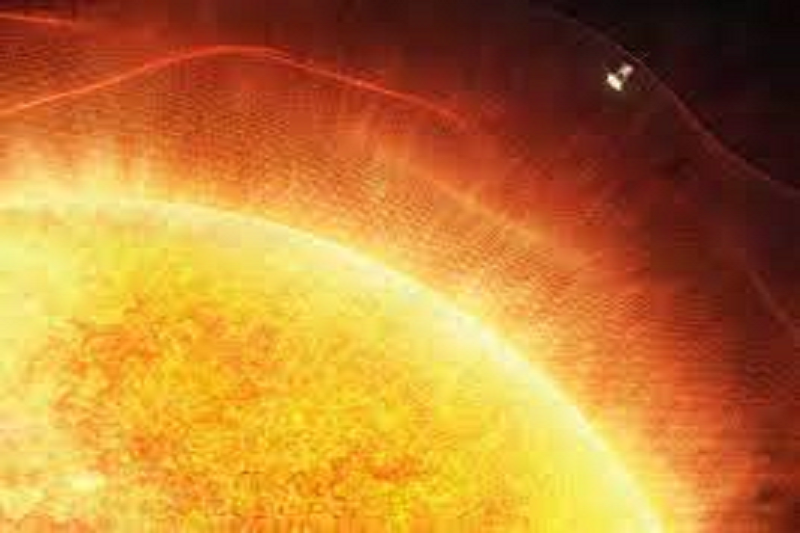
    Parker is currently flying through the Sun’s corona – the tenuous halo of plasma that surrounds the Sun with a temperature of around 2 million degrees. Fortunately, these fantastically high temperatures don’t pose a threat to the spacecraft as the corona is also fantastically thin. Parker’s instruments will now be sampling and probing this never-before-visited region of the Sun’s atmosphere, capturing data on its particle-content and magnetic field. One of the many questions Parker is trying to answer is why the corona has such a high temperature, while the surface of the Sun sits at a comparatively balmy 5500 degrees Celsius.
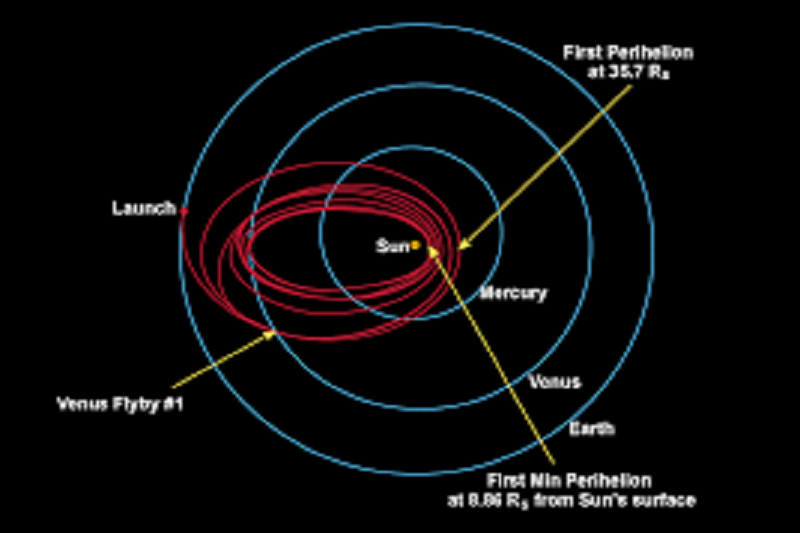
  • Over the next seven years Parker will use repeated flybys of the planet Venus to trim its orbit ever closer to the Sun. Today the probe passed the Sun at a distance of 24 million kilometres, but at the climax of the mission in December 2024 this will be reduced to just 6 million kilometres, 4% of the distance between the Earth and the Sun. If all goes well, Parker promises to transform our understanding of our local star while also improving our ability to forecast solar storms, which pose an increasing threat to the satellite and electrical systems that we all rely on.

    "Parker Solar Probe “touching the Sun” is a monumental moment for solar science and a truly remarkable feat," said Thomas Zurbuchen, the associate administrator for the Science Mission Directorate at NASA Headquarters in Washington. "Not only does this milestone provide us with deeper insights into our Sun's evolution and its impacts on our solar system, but everything we learn about our own star also teaches us more about stars in the rest of the universe.”

  • Images

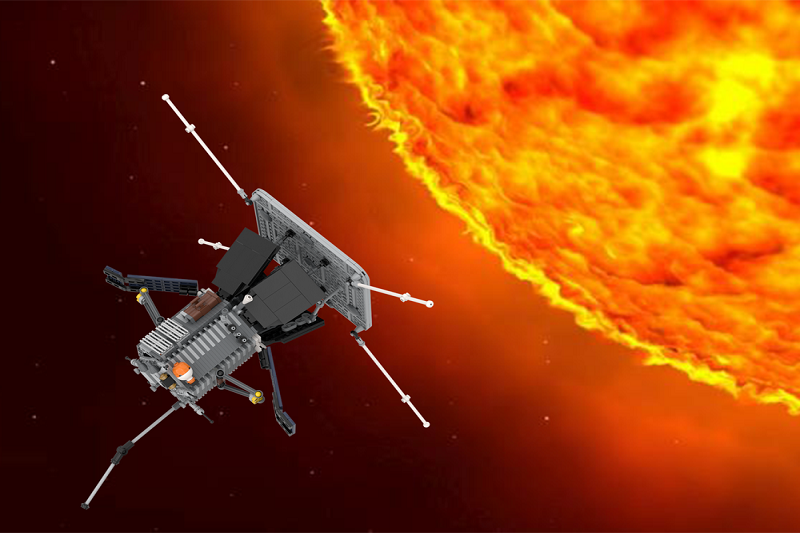
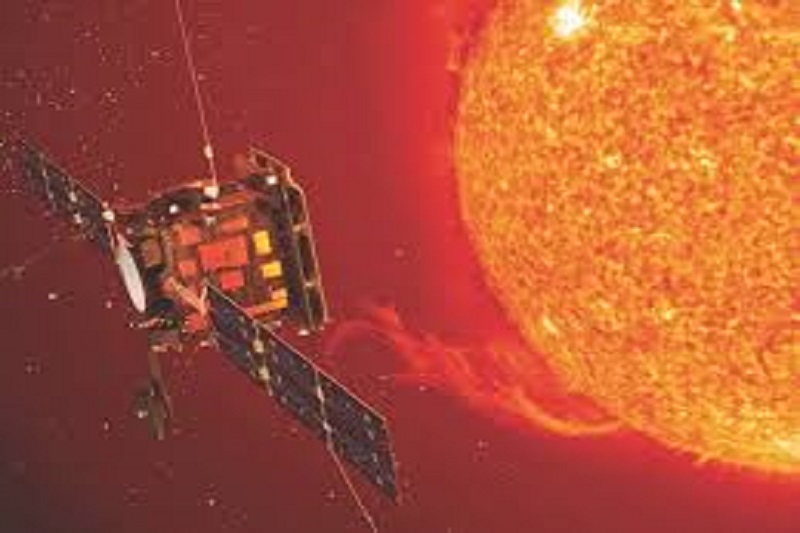
    The Parker Solar Probe is a NASA space probe launched in 2018 with the mission of making observations of the outer corona of the Sun.

    Image
    Image
    Image
    Image
    Image
    Image
    Image
    Image
  • Gallery Two

    It will approach to within 9.86 solar radii from the center of the Sun, and by 2025 will travel, at closest approach, as fast as 690,000 km/h, or 0.064% the speed of light

    Image
    Image
    Image
    Image
    Image
    Image
    Image
    Image
  • Data one

    Closer Than Ever Before Parker Solar Probe launched in 2018 to explore the mysteries of the Sun by traveling closer to it than any spacecraft before. Three years after launch and decades after first conception, Parker has finally arrived.Unlike Earth, the Sun doesn’t have a solid surface. But it does have a superheated atmosphere, made of solar material bound to the Sun by gravity and magnetic forces. As rising heat and pressure push that material away from the Sun, it reaches a point where gravity and magnetic fields are too weak to contain it.Importantly, beyond the Alfvén critical surface, the solar wind moves so fast that waves within the wind cannot ever travel fast enough to make it back to the Sun – severing their connection. Until now, researchers were unsure exactly where the Alfvén critical surface lay. Based on remote images of the corona, estimates had put it somewhere between 10 to 20 solar radii from the surface of the Sun – 4.3 to 8.6 million miles.

    Data two

    NASA Enters the Solar Atmosphere for the First TimeFor the first time in history, a spacecraft has touched the Sun. NASA’s Parker Solar Probe has now flown through the Sun’s upper atmosphere – the corona – and sampled particles and magnetic fields there. The new milestone marks one major step for Parker Solar Probe and one giant leap for solar science. Just as landing on the Moon allowed scientists to understand how it was formed, touching the very stuff the Sun is made of will help scientists uncover critical information about our closest star and its influence on the solar system.

    Data three

    Sixty years ago, NASA set an out-of-this-world goal: touch our Sun. Sending a spacecraft to the fiery star at the center of our solar system is no small feat. From engineering a spacecraft that could hurtle 430,000 mph through space to agreeing on what kinds of data it would capture, there was a lot to sort out. A half-century in the making, Parker Solar Probe finally launched in 2018. Now, three years later, it has touched the Sun.NASA Program Scientist Kelly Korreck serves as head of science operations and project manager for the Solar Wind Electrons Alphas and Protons, or SWEAP, investigation. SWEAP is one of four instrument suites aboard Parker Solar Probe. SWEAP includes a cup that sits outside the spacecraft’s heatshield to scoop up some of the Sun’s plasma. At least one engineer has deemed it “The Bravest Little Instrument.”

  • Copyright © exprore-sun -gutta explrore-sun-gutta